📚 Course Content
Warning
If you’ve already completed the Certificate Overview, you’re ready to dive into the course content! If not, we recommend you start there.
🚀 Getting Started
These courses are integrated with coding exercises via GitHub Classroom, so you will need a GitHub account (naming convention: John H. Smith → jhsmith or Jane M. Doe → jane-doe).
👉 First Step: Complete the 🔗 GitHub starter tutorial to familarize yourself with the assignment structure and keep everyone on the same page.
👉 Second Step: Complete the 🔗 Intro to GitHub Classroom tutorial to familarize yourself with the assignment structure and keep everyone on the same page.
💡 Building a “Hello World” for self-driving labs
Warning
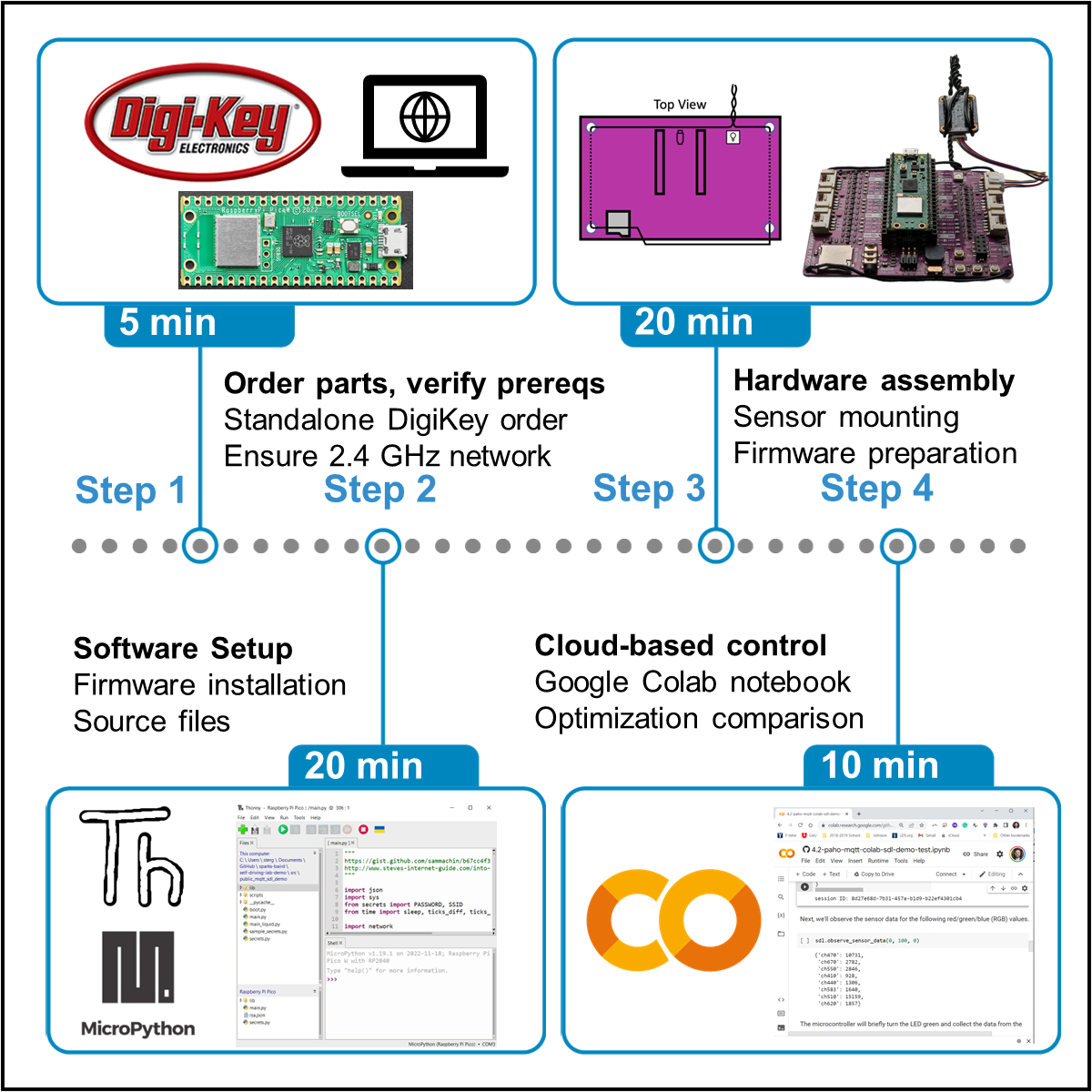
This course requires physical hardware and a 2.4 GHz WPA-2 wireless network. If you do not have the hardware, you will need to purchase the required components, replacing the USB power adapter with the correct style for your country (e.g., European type C), if necessary. You may also refer to “Before you Begin”. You will need access to a 2.4 GHz WPA2-personal wireless network (i.e., WiFi name and password only, without usernames, which is required for most internet-of-things devices). If you do not already have access to one, some alternatives include setting up a home network to broadcast both 2.4 GHz and 5 GHz networks per your router’s specific instructions, or perhaps easier - using a mobile hotspot in extended compatibility mode. Likewise, you may also use a SIM-enabled router. See some recommendations for gaining access to the required network.
UPDATE: (2024-04-01) If the AS7341 sensor shows as being on backorder, you can either order it from DigiKey still and wait until it comes back in stock or source it from another supplier (see e.g., Adafruit’s listing, Mouser). If you have trouble accessing the DigiKey cart, see the CSV version of the cart [permalink].
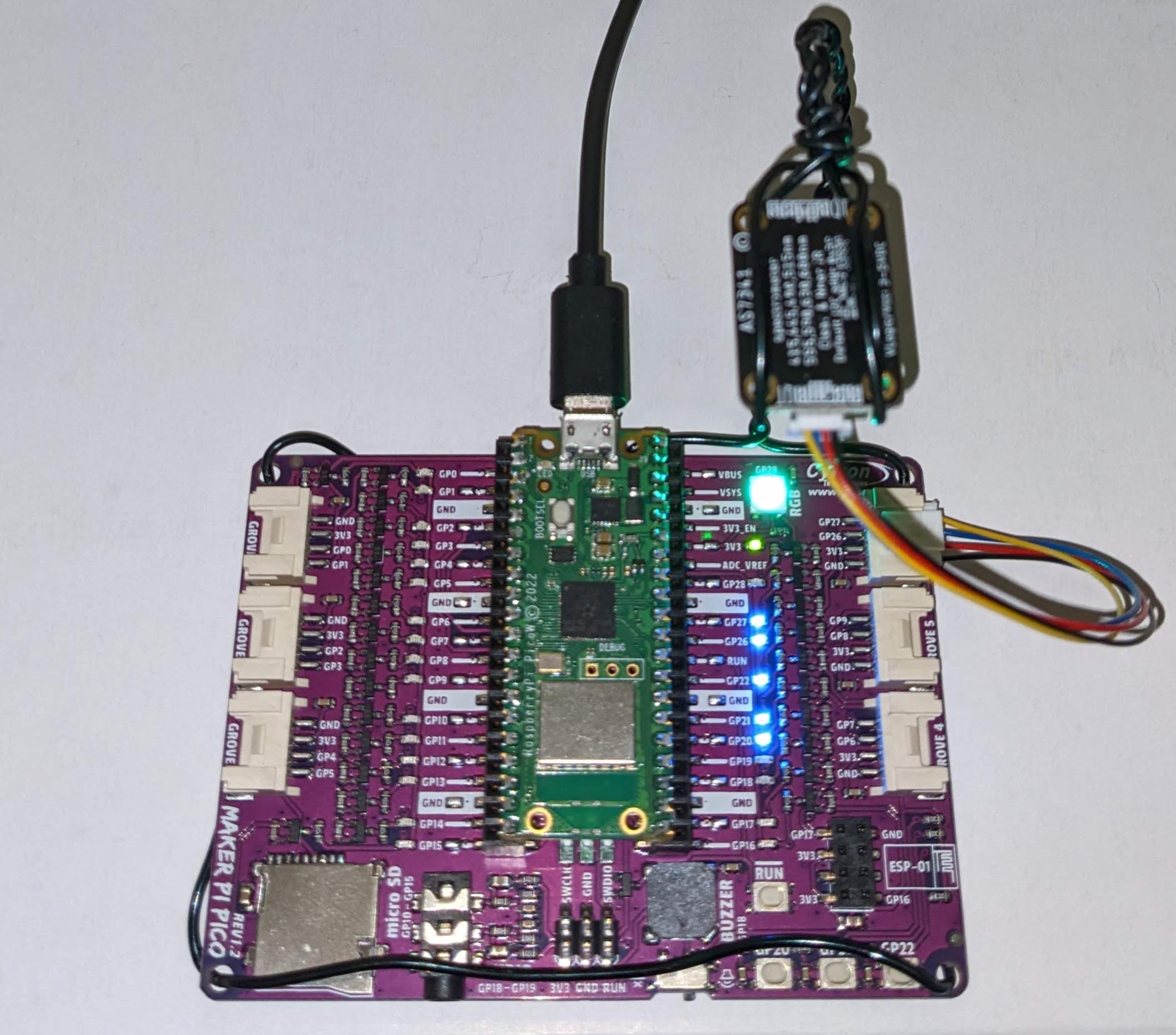
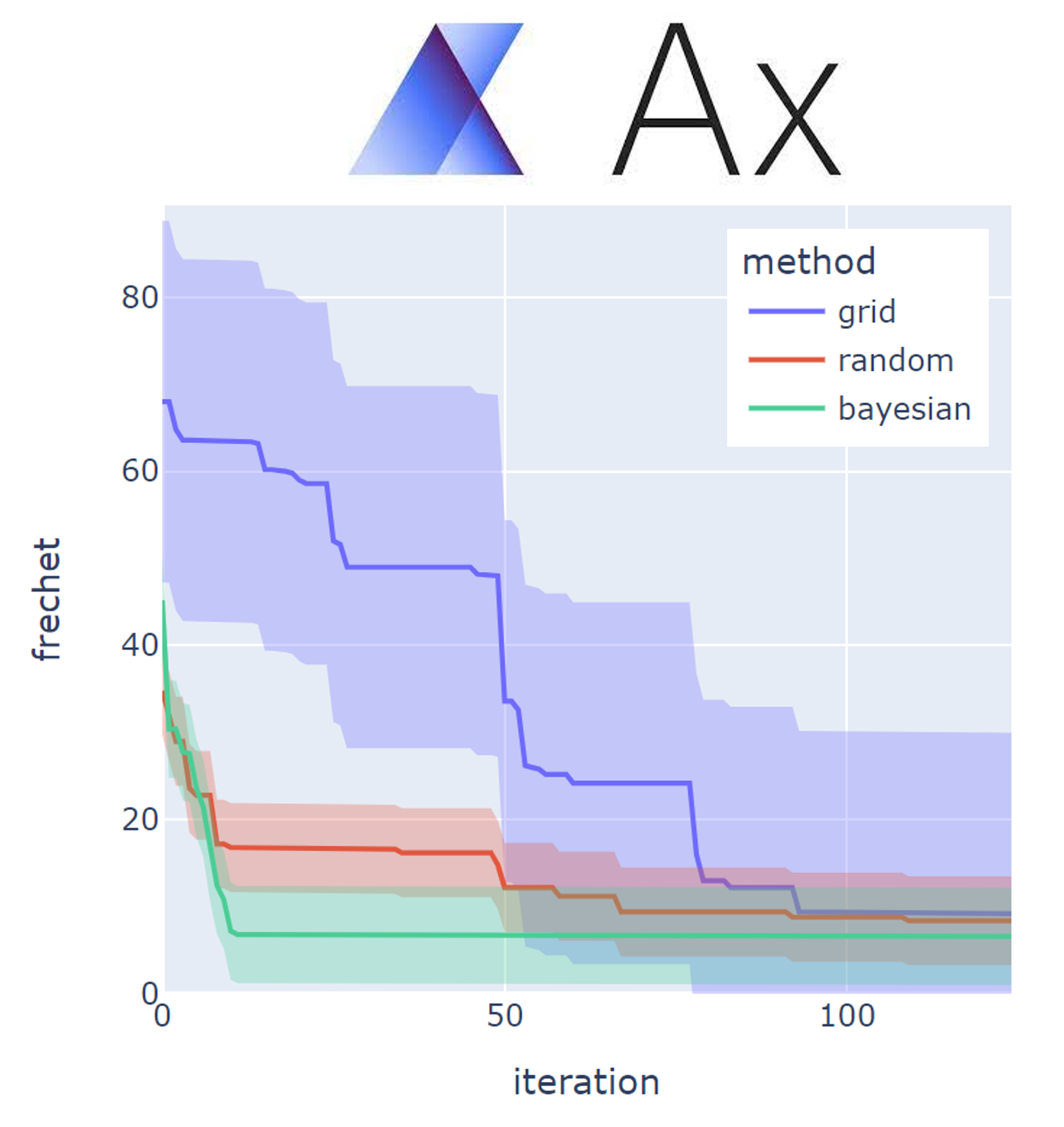
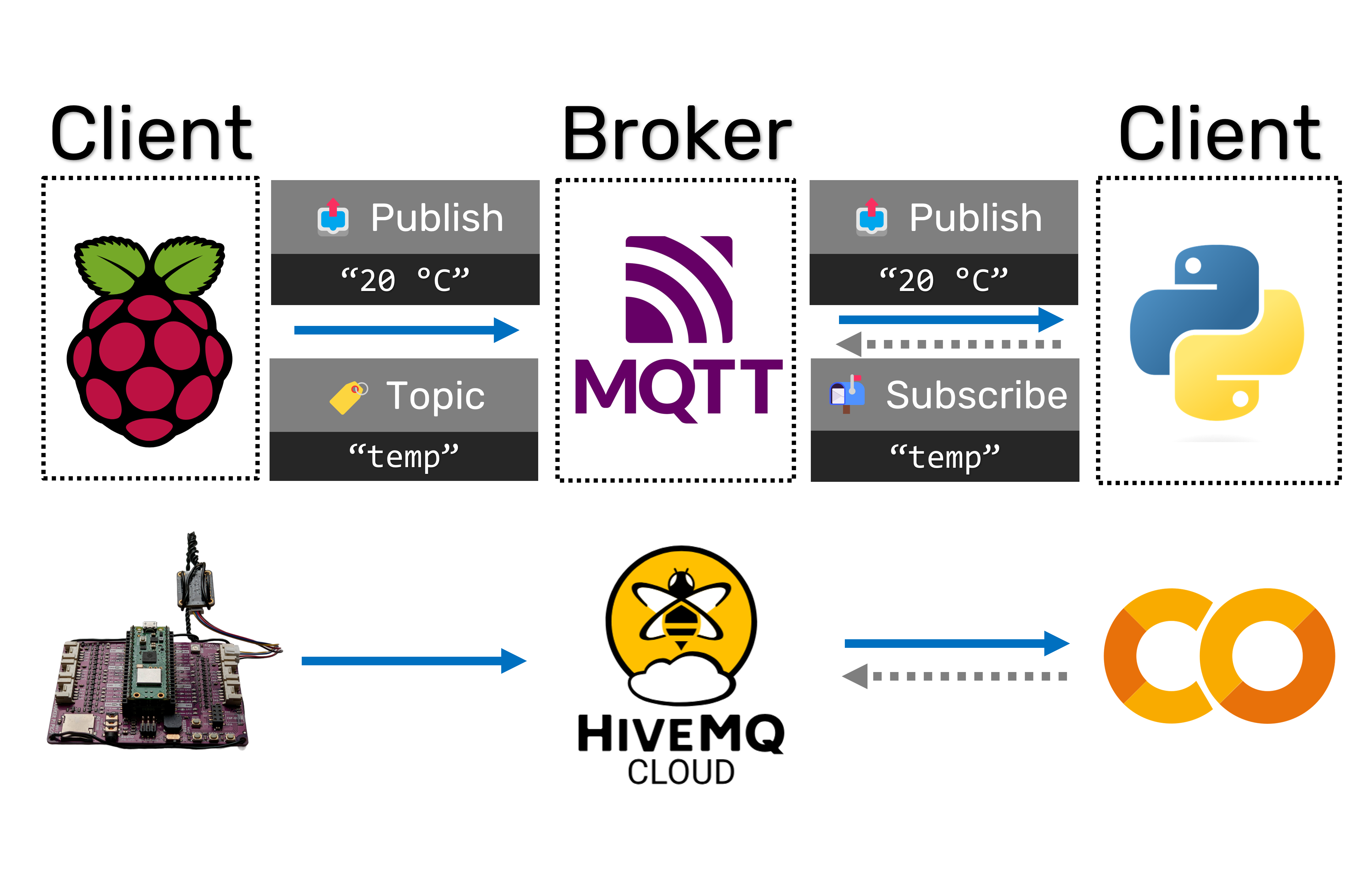
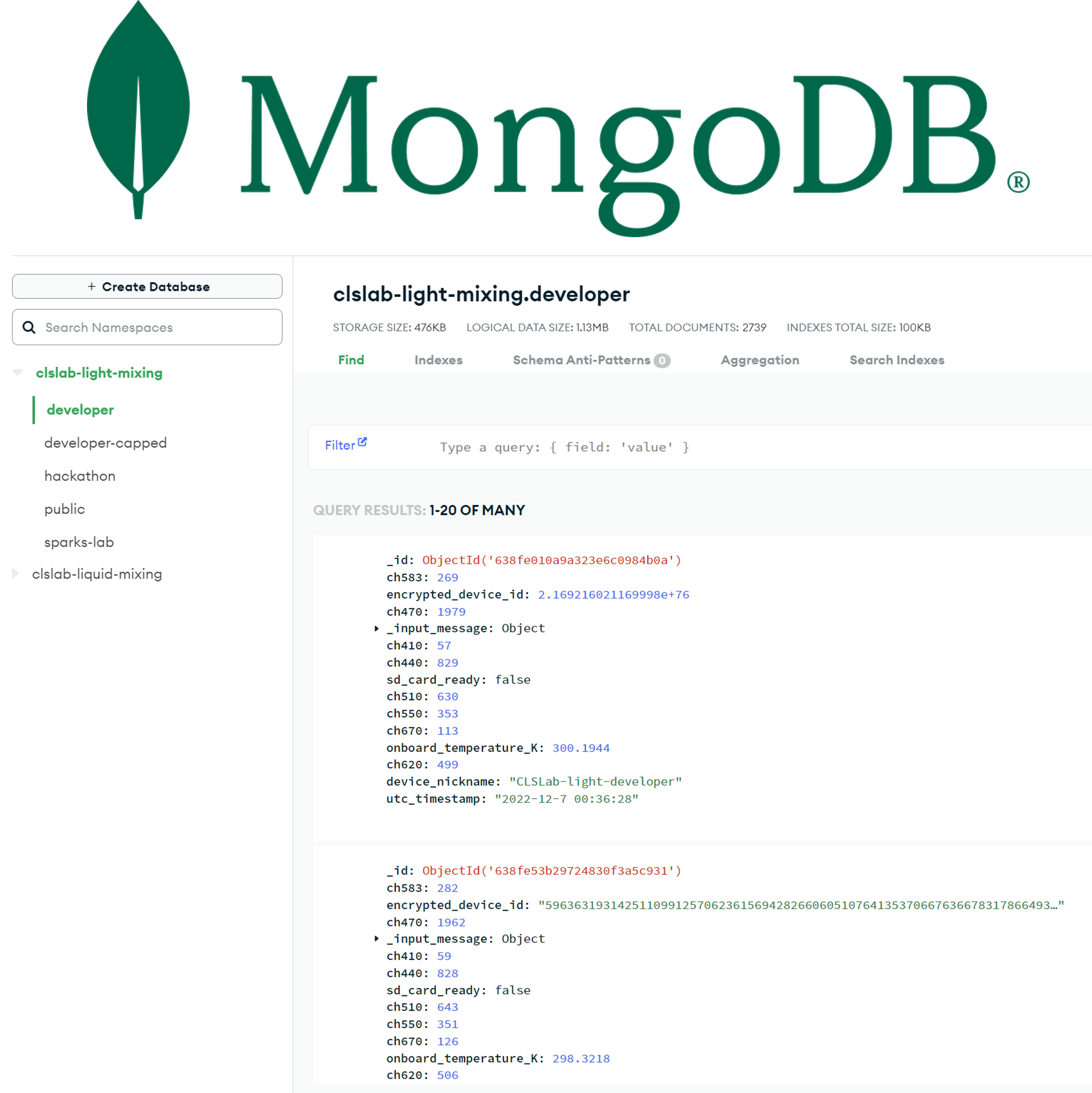
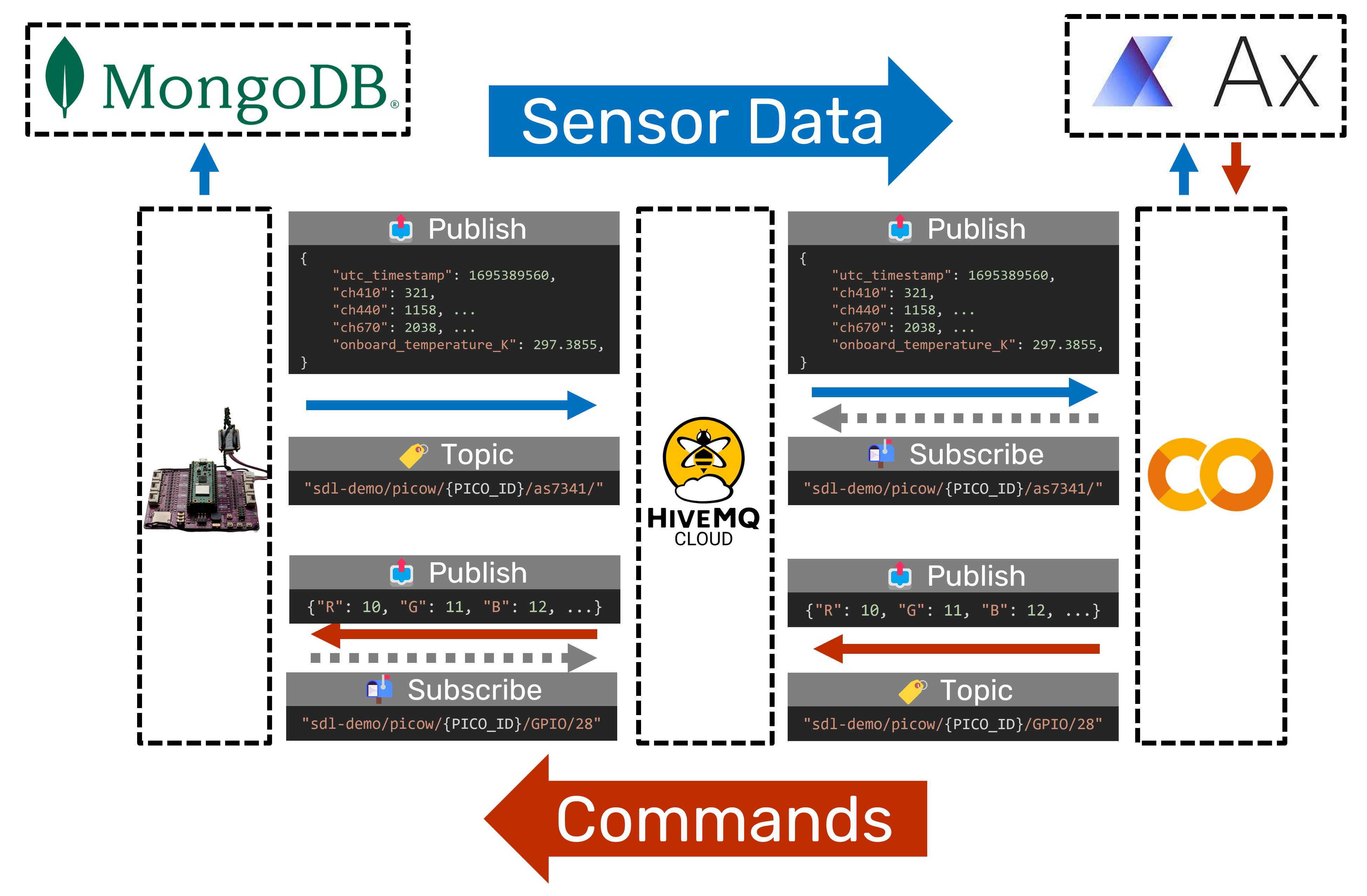
Discover the essential principles of self-driving laboratories (SDLs) by building a “Hello World” SDL from scratch. In this asynchronous, remote course, you will build a self-driving color matcher using dimmable LEDs and a light sensor. This introduction will help you implement hardware/software communication via MQTT, database integration via MongoDB, microcontroller programming with a Raspberry Pi Pico W, and optimization via the Adaptive Experimentation (Ax) Platform. The course will conclude with an expansion of the demo to the research-relevant task of continuously logging temperature, humidity, pressure, light, and accelerometer data.
📈 Data Science for Self-Driving Labs
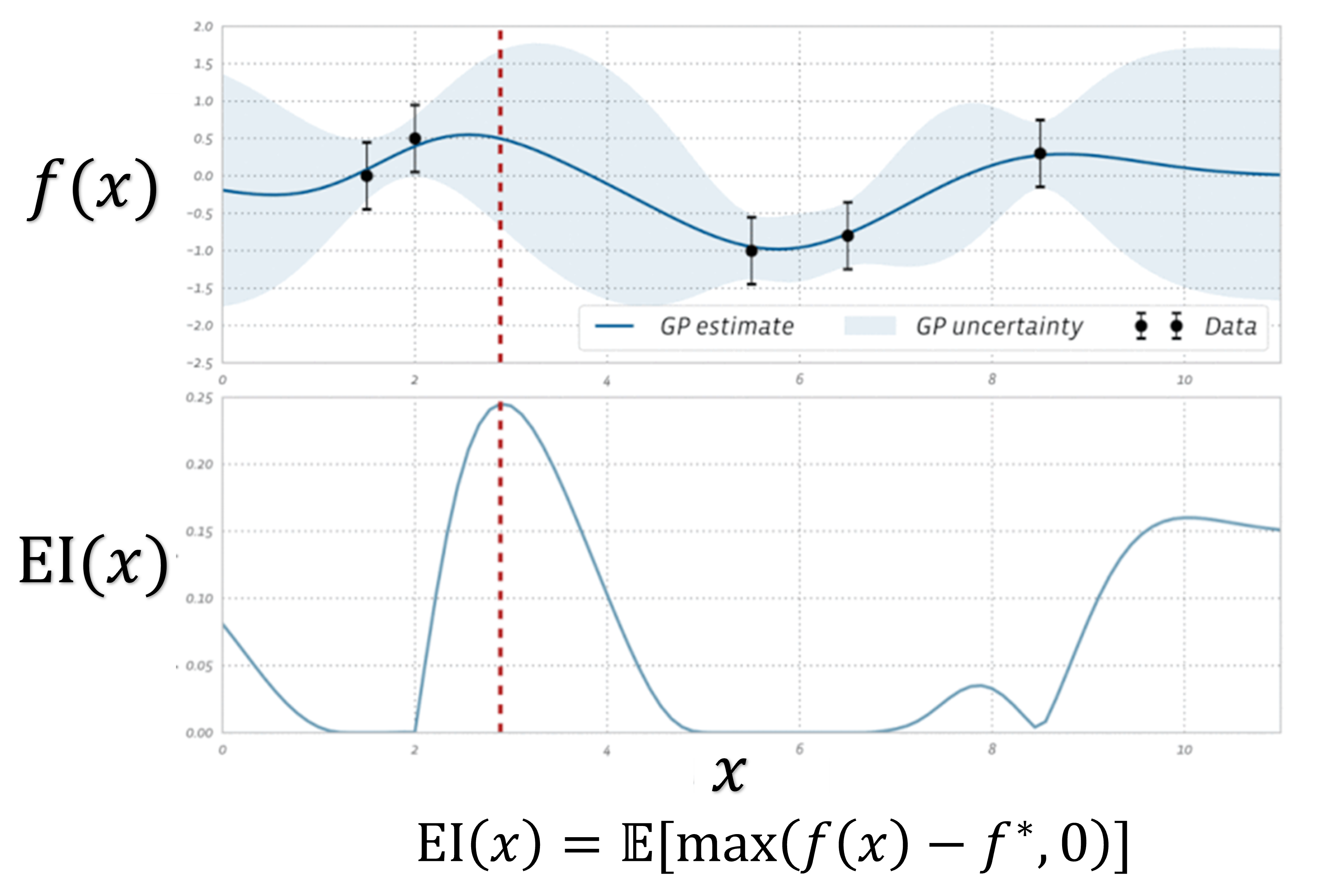
Unleash the power of data science in the realm of self-driving laboratories. This remote, asynchronous course empowers you to apply data science concepts to materials discovery tasks. You’ll create Bayesian optimization scripts using the Ax Platform, explore advanced optimization topics, and use the Honegumi template generator to create an advanced optimization setup for a materials discovery task. Additionally, you’ll learn to share your findings by uploading datasets to FigShare, creating benchmark models with scikit-learn, and hosting models on HuggingFace.


🦾 Robotics for Self-Driving Labs
Embark on a journey into the world of robotics and automation for self-driving laboratories. This asynchronous, remote course equips you with the skills to control peristaltic pumps, linear actuators, automated liquid handlers, and solid dispensers using a Pico W microcontroller, a motor driver, and the Covalent workflow orchestration package. You’ll also learn to control mobile cobots using the Robot Operating System (ROS) framework and to perform spatial referencing and ID recognition via AprilTags and OpenCV. The course will conclude with a solid sample transfer workflow using Covalent, ROS, AprilTags, OpenCV, and a multi-axis robot.


🧑💻 Software Development for Self-Driving Labs
Elevate your software development skills in the context of self-driving laboratories. This asynchronous, remote course introduces software development concepts and best practices and productivity tools such as integrated development environments (IDEs) with VS Code, unit testing with pytest, continuous integration via GitHub actions, and documentation creation using Sphinx and Read the Docs. You’ll also learn to deploy materials discovery campaigns on cloud servers or dedicated hardware and run offline simulations using cloud hosting.


🏢 Capstone Project at the AC Training Lab
Note
🔑 Due to the intensive nature of this in-person course and to maximize value to the participants, completion of the previous four courses are mandatory.
Turn your self-driving lab expertise into a real-world project. During this course, you will propose, design, and build a self-driving laboratory at the AC training lab equipped with education- and research-grade equipment including liquid handlers, solid dispensers, Cartesian-axis systems, and mobile robotic arms. Prior to arrival, you’ll create schematic figures, write white papers, and present your proposals to a team of scientists. During a week-long in-person experience, you’ll implement your proposal and document your progress. After the visit, you will share your designs, data, and documentation to contribute to the public knowledge base.


